
Balinese arak is a clear spirit distilled from fermented palm sap or rice, made on the island for centuries and used in both temple offerings and everyday celebrations. Fragrant and usually strong, it is Bali's own answer to rum, soju or grappa, and a new generation of bartenders has made it a star of the island's cocktail scene.
What is Balinese arak?
Balinese arak belongs to the wider family of arrack spirits made across South and Southeast Asia from palm, sugarcane or rice. It has nothing to do with the anise-flavoured arak of Lebanon and Syria, despite the shared name.
In Bali, arak, often sold simply as arak Bali, is a village craft. Families in Karangasem, in the island's east, are especially known for it, and the hillside villages around Sidemen have produced arak for generations. Strength varies widely: branded bottles usually sit around 30 to 40 percent alcohol, while village arak can be stronger or weaker.
How Balinese arak is made
Most Balinese arak starts with sap tapped from the flower stalks of coconut or lontar palms. The sweet sap ferments naturally within hours into tuak, a mild palm wine. Producers then distil the tuak in simple stills, often heated over a wood fire, and collect the clear spirit drop by drop.
Arak can also be made from fermented rice, the same base used for brem, Bali's sweet rice wine. Today you will find several styles:
- Palm arak: made from coconut or lontar sap, clean and lightly sweet with a grassy aroma.
- Rice arak (arak beras): softer and rounder, with a gentle rice sweetness.
- Fruit arak: distilled or infused with local fruit such as salak, Bali's snakefruit.
- Infused and aged arak: steeped with spices, honey or flowers such as sandat, Bali's fragrant ylang-ylang, or rested in clay pots to soften.
Arak in Balinese culture
Arak is part of Balinese ritual life. Together with brem and tuak, it is poured as part of offerings during ceremonies, meant to keep the unseen forces of the world in balance. Explore more of the island's traditions in our guide to Balinese food.
It is also a social drink. Arak is shared at village gatherings, weddings and cremation ceremonies, and a small glass passed around is a sign of welcome.
Is Balinese arak legal?
Yes. For years arak was made and sold informally, but in January 2020 Bali's governor issued Governor Regulation No. 1 of 2020 on the governance of traditional Balinese fermented and distilled drinks. It protects local producers and allows arak to be produced and sold through licensed channels.
The province later named 29 January as Arak Bali Day to celebrate the spirit. Legal bottles of arak Bali carry the brand name and Indonesia's excise band, known as pita cukai.
Is Balinese arak safe to drink?
Properly made Balinese arak from a licensed producer is as safe as any other spirit. The risk comes from illegal or adulterated alcohol, which can contain methanol, a toxic substance that has caused serious poisoning among travellers in Indonesia. SafeTravel New Zealand and other governments advise visitors to be careful with spirits and cocktails.
A few simple habits keep you safe:
- Drink at licensed bars and restaurants that pour from branded bottles.
- Check the bottle: look for a clear label and the excise band when buying arak.
- Avoid unlabelled bottles and suspiciously cheap cocktails or drink buckets.
- Know the warning signs: blurred vision, severe headache, nausea or breathing difficulty after drinking, even many hours later, need urgent medical help.
How to drink Balinese arak
There is no single right way to drink Balinese arak. Locals often sip it neat in small glasses or mix it with honey and lime as arak madu, a simple and soothing classic. Many visitors first try it with soda or lemonade.
The best way to understand its range, though, is in a well-made cocktail. Arak's clean, slightly sweet character works beautifully with tropical fruit, citrus and Indonesian spices such as clove, nutmeg and cardamom. Read more about these in our guide to Indonesian spices.
Where to drink Balinese arak in Ubud
In Ubud, Spice by Blake on Jalan Monkey Forest has a dedicated arak list, the House of the Arak, plus a cocktail menu built around Indonesian fruits and spices, open daily from 4pm to midnight.
The House of the Arak pours four labels by the glass or by the bottle, from IDR 110,000++ a single:
- Arak Dewi Sri
- Selakaning Arak Salak, made with snakefruit
- Arak Palwana
- Karusotju 25
For something more playful, four cocktails on the menu put arak at the centre, each IDR 135,000++:
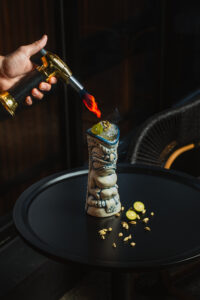
- Island Tribe: rice arak with cardamom-infused brem, calamansi and kaffir lime leaf soda and a spiced syrup.
- The White Snapper: arak infused with basa gede, the essential Balinese spice paste, lifted with umami tomato soda and chilli cordial.
- Citrus Garden: claypot-aged arak sandat with tangerine honey soda and a clove and citrus oleo.
- Bir Pletok: a twist on bir pletok, Jakarta's spiced ginger drink, with pletok soda, Luxardo Bitter Bianco and arak.
The kitchen stays open until 11pm, so you can pair your drinks with modern Indonesian dishes and skewers. It is one of the easiest stops for late night food in Ubud. See the full menu before you visit.
Frequently asked questions
What is Balinese arak made from? It is distilled from fermented palm sap, usually from coconut or lontar palms, or from fermented rice. Some versions are infused with fruit, spices, honey or flowers.
Is arak legal in Bali? Yes. Bali's Governor Regulation No. 1 of 2020 allows traditional arak to be produced and sold through licensed channels. Legal bottles carry a brand label and Indonesia's excise band.
Is arak safe to drink in Bali? Arak from licensed producers, served at licensed bars and restaurants, is safe in moderation. Avoid unlabelled bottles and very cheap cocktails, and seek medical help quickly if you notice blurred vision or severe headache after drinking.
What does arak taste like? Palm arak tastes clean and lightly sweet, sometimes grassy or floral, while rice arak is softer and rounder. Many people compare it to a light rum, soju or grappa, which is why arak Bali works so well in cocktails.
What is the difference between Balinese arak and Middle Eastern arak? They are completely different drinks. Arak from Lebanon and Syria is a grape spirit flavoured with anise, while Bali's arak is made from palm sap or rice and has no anise flavour.
Raise a glass of arak in Ubud
From village stills in Karangasem to modern cocktail bars, arak tells the story of Bali in a single glass. Taste it neat or in a cocktail at Spice by Blake, Jalan Monkey Forest, Ubud, open every day until midnight.
