
Food in Bali has become one of the main reasons people fall in love with the island. Beyond temples and beaches, travellers now plan their itineraries around where to eat, what to taste, and how to get a deeper sense of culture through the dishes they try. From humble warungs to chef-driven dining rooms, the culinary scene is layered, expressive, and constantly evolving as food in Bali becomes more experimental and creative.
This guide is written for guests who want more than just a quick list of “must-visit places.” It helps you understand the stories, ingredients, and ideas behind the plates you’ll encounter, and shows where a modern Indonesian restaurant like Spice by Blake fits into the bigger picture.
How Culture Shapes Food Traditions in Bali
Before talking about the modern scene, it helps to understand how deeply food is woven into daily life on the island. Understanding food in Bali means seeing how cooking here is not only about taste; it is closely linked to ceremony, family, and ritual.
Many of the dishes visitors recognise today began as offerings for temple festivals or family celebrations. Spice pastes, or bumbu, are prepared with care using turmeric, galangal, ginger, shallots, candlenut, and chili. Coconut milk, palm sugar, and rice form the backbone of many recipes. Vegetables and herbs are picked fresh, often from gardens right next to the kitchen.
Eating together is an important part of community life. Meals are designed to be shared, with many small dishes placed in the middle of the table so everyone can take a little of everything. This sense of togetherness still shapes the way people experience meals across the island.
Essential Dishes to Try When Exploring Food in Bali
If you are new to the island, there are a few dishes that give a strong first impression of local flavour and help you start mapping out what food in Bali really feels like day to day.
Babi guling
Perhaps the most famous of all. Whole pork is rubbed in spices, slow-roasted until the skin is crisp, then served with rice, vegetables, crackling, and sambal.
Bebek betutu
Duck marinated in a rich spice mixture, wrapped, and cooked for hours. The result is tender, smoky, and deeply aromatic.
Sate lilit
Minced meat mixed with grated coconut and seasonings, then wrapped around lemongrass sticks. It is lightly charred and very fragrant.
Lawar and nasi campur
Shredded vegetables, coconut, herbs, and minced meat served with rice and sambal on a single plate. You get many textures and flavours at once.
Traditional sweets
Snacks made from sticky rice, coconut, pandan, and palm sugar. They are colourful, simple, and comforting.
These dishes have roots in ceremony and home cooking, and they help you understand where the island’s culinary identity begins.
From Tradition to Innovation: The New Face of Food in Bali
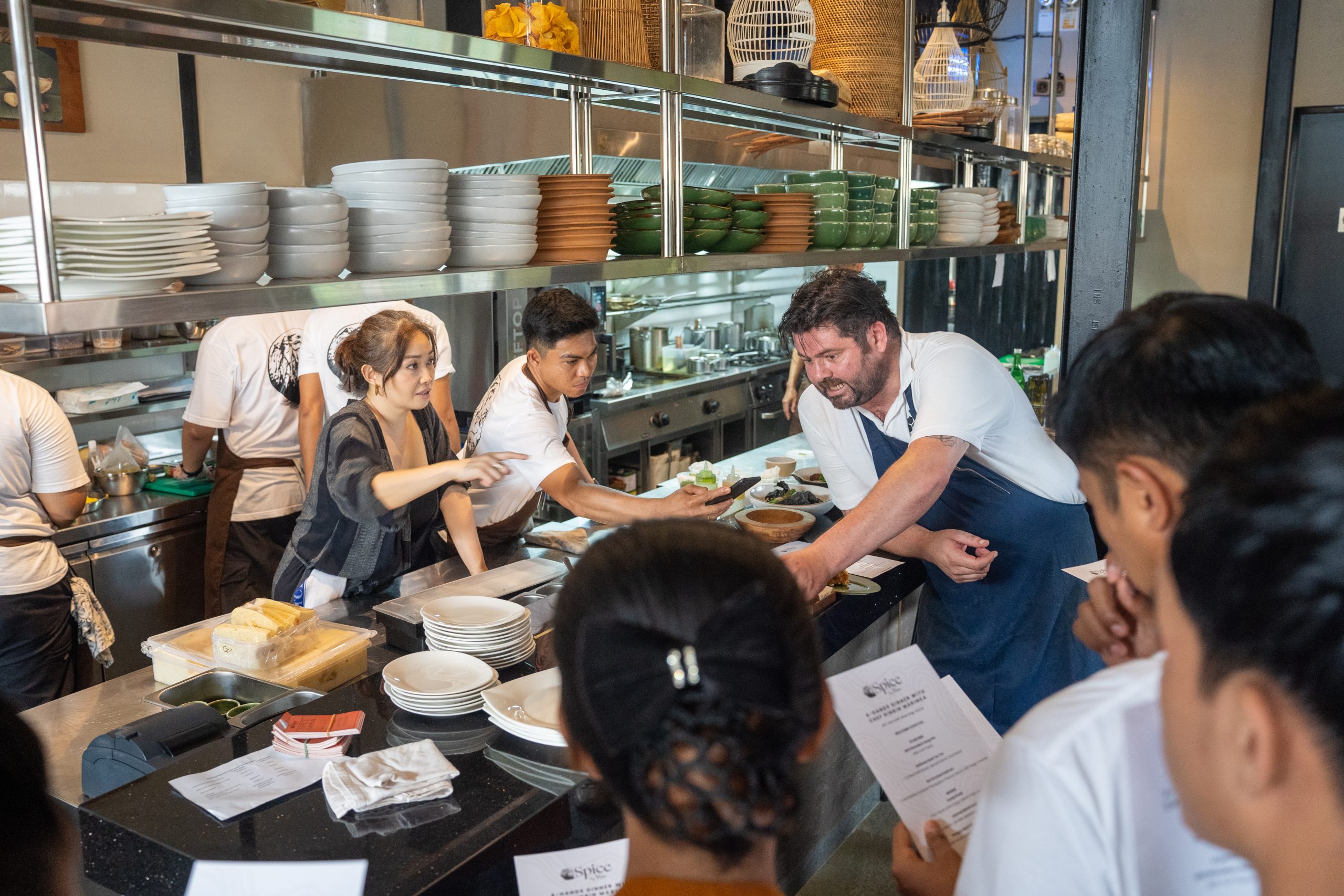
In the last decade, the way people talk about eating on the island has changed. A new generation of chefs has taken the flavours they grew up with and combined them with techniques learned around the world. Instead of copying Western menus, they use international training to highlight ingredients from across the archipelago and shape a more modern side of food in Bali.
You will find tasting menus built around local produce, plates that pair classic spice pastes with precise cooking, and menus that celebrate forgotten regional dishes in a modern style. The focus is still on flavour, but presentation and structure are more refined.
This is where restaurants like Spice by Blake play a key role. Rather than serving textbook versions of traditional recipes, they honour the spirit of those dishes while allowing for creativity, surprise, and playfulness. Guests taste something familiar and new at the same time.
Why Ubud Sits at the Heart of Food Conversations in Bali
While there are important dining destinations all over the island, Ubud has become the centre of many culinary conversations. The town is surrounded by rice fields, vegetable farms, and small producers, making it easy for chefs to work closely with growers. It is also known as a place where wellness, sustainability, and creativity come together.
Visitors who care about what they eat often base themselves here for at least a few nights. They spend their days between cafés, warungs, and chef-led restaurants, seeing how different kitchens interpret the same ingredients in their own way. This concentration of curious guests and inventive chefs keeps the local scene evolving and ensures that discussions about food in Bali remain lively and forward-looking.
Spice by Blake: A Modern Indonesian Interpretation of Food in Bali
On Monkey Forest Road, Spice by Blake brings a lively and contemporary approach to Indonesian flavours. Led by Chef Blake Thornley, the restaurant is part dining room, part cocktail bar, and fully focused on flavour.
One of its signatures is the “Feed Me” menu, an eight-course shared experience that changes based on what the kitchen is excited about. Rather than ordering dish by dish, you let the team guide you through a sequence of plates that build in intensity and contrast.
Ingredients such as torch ginger, local citrus, fresh seafood, and deeply savoury spice pastes are treated with a mix of instinct and technique. Dishes are designed to be vibrant and fun, not overly formal. It feels like a place where modern city energy meets the soul of the island and where you can see how a chef reads the possibilities of food in Bali through his own lens.
The drink program is just as considered. Cocktails are built with local botanicals, infusions, and fruits, so the bar becomes another way to explore flavour. This balance between kitchen and bar is a big part of what makes the restaurant stand out in the current dining landscape.
Cocktails, Conversation, and the Social Side of Eating in Bali
One of the biggest shifts on the island has been the way drinks now support the food experience. Instead of simply listing a standard set of classics, many bars and restaurants work with house-made infusions, local fruit, and Indonesian spices.
At places like Spice, cocktails are designed to complement the dishes rather than sit apart from them. A bright, citrus-forward drink might be paired with something rich and smoky from the grill. A deeper, spiced cocktail might follow a lighter course based on vegetables or seafood.
This makes a night out feel more like a journey than a simple sequence of starters and mains. Guests talk about what they are tasting, share plates across the table, and linger longer. The social side of eating becomes just as important as the food itself.
Planning Your Own Culinary Itinerary on the Island
For many visitors, it helps to think of their eating plans in three layers:
- Heritage and home-style cooking – markets, roadside stalls, and small family-run warungs.
- Modern Indonesian restaurants – places that reinterpret classic flavours with new techniques.
- Bars and late-night spots – where drinks, music, and snacks come together.
A well-balanced itinerary might include a traditional lunch, a relaxed afternoon coffee, then a dinner at a restaurant like Spice where you can see how those same ingredients behave in a more contemporary, playful setting. Thinking in layers like this makes it easier to map out your own version of food in Bali without feeling overwhelmed by choice.
Booking ahead is wise for popular spots, especially in Ubud. Many modern restaurants are small by design, so reservations help you avoid disappointment during busy periods.
What Makes Eating on the Island So Memorable
Long after travellers go home, they often remember specific meals from their time here: a simple plate of rice and vegetables enjoyed under a roadside shelter while it rained, a carefully plated tasting menu that introduced them to a new spice, a late-night conversation over cocktails in a buzzing dining room.
What makes these memories so strong is not only taste, but context. Ingredients are grown nearby. Recipes carry stories of families and ceremonies. Chefs and bartenders are eager to explain what you are experiencing. Hospitality feels warm and unforced.
The island manages to offer both comfort and discovery at once. That combination is hard to forget.
Why Spice Belongs on Your Shortlist
If you are building a list of places to eat that show how the local scene is evolving, Spice by Blake deserves a place near the top. It captures many of the themes that define the island’s current moment: respect for local produce, curiosity about flavour, a love of sharing plates, and a strong connection between kitchen and bar.
You can come for a full “Feed Me” experience, drop in for cocktails and a few plates, or use it as a starting point to explore other modern Indonesian restaurants around Ubud. However you choose to visit, it is a restaurant that helps you see how tradition and innovation can sit comfortably at the same table.
In the end, that balance is what makes eating here so interesting. The island honours where it came from while staying open to new ideas, and guests get to taste that evolution one dish at a time. For many people, this is exactly what they are hoping to find when they start searching for food in Bali that tells a story, not just fills a plate.
Plan Your visit
Spice by Blake
Jl. Monkey Forest, Ubud, Bali
spicebali.com
+62 812-3458-6169
Open daily from 4 PM until late.
Reservations recommended for dinner service.
